Tuesday, November 19, 2013

Microsoft’s Trial with Fuel Cell Energy

Microsoft experiments with methane-powered fuel cells are extremely fascinating. Without further a a due, lets get into the topic:

So what is Fuel Cell?

Fuel cell is a device that generate electricity through chemical reaction. Fuel cell has gained intrigue and popularity through its environmentally healthy benefits. Unlike fossil fuels the by products of fuel cells are just simply heat and water. The beauty of a fuel cell is the fact that the flow of chemicals is constant, this means that it never goes dead - as long as there is a flow of chemicals into the cell, the electricity flows out of the cell.


With a growing trend and consumer expectations for large companies to take more proactive steps for green efficiency, Microsoft has take the initiative and is building a data center in Cheyenne, Wyoming that will be powered by methane generated at a waste water treatment plant. Microsoft has also released a research paper indicating its plans to construct smaller methane fuel cells right in their server racks - essentially putting tiny power plants inside of the data centers. The Cheyenne data center will be powered by 300-kilowatt fuel cell located near the waste water plant, the new concept would use thousands of 10 to 20 kilowatt fuel cells.


Microsoft have claimed that this initiative could save about 20 percent of the cost of the data centre, but also argue that they win out because of reliability. The set-up would be based around multiple fuel cells, so there would be no single point of failure.

“Why this hasn’t been done before is that the fuel cell technology has evolved to the point that the power efficiency that would normally need a large turbine can now fit in a rack,” Sean James, a senior research program manager for Microsoft’s Global Foundation Services, told the magazine.

So with this exciting trial underway, it’s success or failure will undoubtedly pave the way for further improvements in green technology.


Msft-Chicago-data-center_610x295.jpg


Ref:

http://www.wired.com/wiredenterprise/2013/11/microsoft-fuel-cells/

http://auto.howstuffworks.com/fuel-efficiency/alternative-fuels/fuel-cell1.htm

http://www.techweekeurope.co.uk/news/microsoft-fuel-cell-data-centre-131728

Friday, November 8, 2013

The Smart Grid: Linking electricity with IT


There is little doubt of the impact that our increasing electricity usage has on the environment and to utility bills. Often, electrical companies are stretched thin when many consumers are drawing power at the same time (peak demand) and often rely on additional fossil fuels to assure this demand is met without issues. The advancement of IT systems has allowed the growth of the “smart grid” that links information and electrical infrastructures to optimize energy loads across the grid.

With the new technology, companies are able to receive live data transmitted from smart meters on homes and can regulate demand more smoothly. Better links in the grid allow for home owners to feed power back to the company when possible. For example, a battery storage source could be brought online if connected to the grid at home and then recharged at lower demand times. This possibility has become even more appealing to electric car owners who are even starting to receive reduced rates in some areas to charge their car at night and allow energy providers to use their stored battery during peak demand loads.


The smart grid also makes home power generation through solar panels or windmills more attractive with the possibility of selling additional power back to the grid. These features allow for better demand management of electrical power and show how new, live information can lead to great efficiency.

The smart grid is a blend between efficient software and IT. In this case, programming methods and algorithms are used efficiently to perfectly match demand and need. New technology provides the physical backbone. Green software can be seen as one of the constituent parts of green IT. It harnesses the power of information technologies and uses it for the benefit of being more green.

One company which provides smart grid solutions is Cisco.  It has grid architecture blocks that allow the building of such a smart grid. For energy companies like RWE or UK Power Networks these products are an interesting business value proposition to optimize their power networks. They get to benefit from:
  • Reduced production costs. Energy can be stored locally more easily and end-users can input power into the network. This reduces the requirement to run expensive power plants. Therefore production costs are reduced.
  • Less power dissipation. There is less energy dissipated as energy can be produced and stored locally and therefore has less travel distance. It is known that power is lost easily through long distance power grids. Overproduction of energy to compensate for dissipation therefore drops and revenues increase.
  • Demand can be matched more closely. Prediction patterns can be traced to very high details through software similar to that developed by the University of Iowa. This allows correct calibration of energy production and yields the same benefits as above.

    The difficulty with smart grids though is that it is hugely costly to implement. It is basically about digitizing something which has been analog for over a hundred years. This will take years for the energy companies to complete this. Additionally, currently it is just cheaper to produce dirty energy instead of investing in the smart grid to yield the benefits above.

    The real benefits of this technology however reach the end consumers and businesses. They can save energy costs by up to 25% and therefore have great interest in this technology.

    In general though, the smart grid is a novel green technology benefiting businesses and consumers at the same time.

    Stay tuned! Make sure to follow us on Twitter and Facebook for the latest updates.

    Tuesday, October 22, 2013

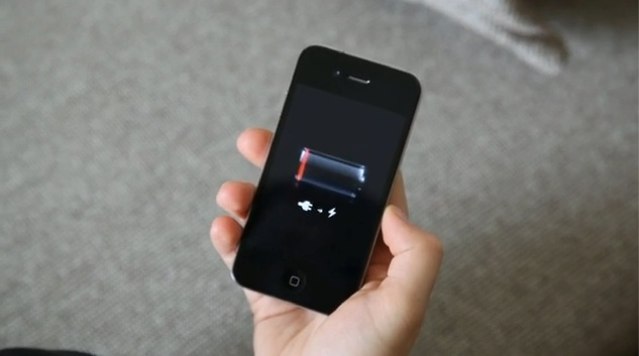
    Top tips for how to make your iPhone battery last longer!

     
    Now we will get practical from a consumer point: lets fix the problem of bad battery life on your iPhone (or even Samsung Galaxy). Getting your iPhone battery to last longer is actually quite easy and only requires a few simple steps and changes in your iOS 7.

    The new iPhone 5S for example offers a mere 10 h talktime and internet. The problem in essence here is that your phone will not even last one day.

    So lets start with the basics of battery saving:
    • Update to the latest iOS. Usually this always includes optimizations in regards to battery life.
    • Reduce brightness. Slightly reducing your brightness already helps a lot. Make sure you are at around 40% brightness on iOS 7 and have auto-brightness activated
    • Use more Wifi instead of 3G/LTE.  Cellular takes a lot of energy and Wifi is much more friendly in that regard. Always join your local office network and possibly even turn data usage off while at the office. You do not need it if you have Wifi!
    • Turn off Bluetooth if you do not need it. That's not just more secure, Bluetooth sucks your battery dry. 
    Save battery life on iPhone and iOS 7 by reducing brightness and turning off Bluetooth.

     Now some more tips if your still craving for more battery life:
    • Turn off a few iOS 7 features you do not need:
      • Turn off Airdrop (unless you are sharing contacts daily)
      • Do not use animated backgrounds
      • Turn off Raise-iPhone-To-Talk for Siri
      • Do not enable the auto-update feature. Especially if you are more on-the-go and never in a Wifi network.
    • Limit push notifications. Do you really need Shazam and your favorite games to send you push notifications? No! Let Facebook, Whatsapp and mail apps keep pushing you notifications but the rest is just wasting your battery life.
    • Do not keep heavy apps open all the time. If you have heavy apps like Skype, Spotify or Pandora installed, just close them if you do not use them. Especially apps which stream things or do VoIP, try to limit their usage and certainly avoid using them over 3G/LTE.
    • Recalibrate your iPhone at least once a month. Use your iPhone and let it completely go dry. Then completely charge it in one go without interruptions. This will recalibrate the calculation for the battery life and hence become more accurate.
    As a last resort: go into Airplane mode!

    Stay tuned! Make sure to follow us on Twitter and Facebook for the latest updates.

    Friday, October 18, 2013

    The challenges of implementing green IT

    Green IT is become one of the top priorities of CIOs and managers at companies. There are however several challenges that they face in implementing green IT. The challenges vary from difficulty in incorporating a green culture to the ever-growing demand of IT. What are these challenges?

    According to Catherine Doran at Network Rail, one of the most important challenges is to incorporate a green culture that motivates the staff to play their part. Also, to consider environmental issues when designing and developing new systems. While this is arguably not easy, there are solutions that do not require a lot of effort. A notable example is the green printing solutions Yashilife looked at a few days ago.

    For Steve Lamey at HMRC, it is crucial to influence hardware and infrastructure suppliers of IT equipment to reduce the costs across the entire supply chain. He argues that IT is estimated to contribute 2% of the world's CO2 emissions and its growing exponentially.


    A recent study from Microsoft, shows that companies that run their applications in the cloud can reduce energy consumption and carbon emissions by 30% or more rather than running those applications on their own infrastructure.

    Steve Wexler addresses the main challenge of Green IT when he explains that the most difficult issue is to establish a measurement and reporting format that accurately and fairly represents data center efficiency which can be easily compared to other data centers. This is currently presenting another challenge to cloud computing as the industry needs to establish agreements on what should be measured and how often.

    It is expected that sooner or later every organization will go green, and cloud computing will play a major role in this.

    If you want to stay updated on the latest trends in Green IT, please follow us on Twitter and like us on Facebook.

    Wednesday, October 16, 2013

    Now or never - Green Printing & Future


    While green IT is mostly about bigger technologies, there are also small tools that can help a business, or even a consumer, to be more efficient and more green.

    Nowadays, the average daily web user prints 28 pages daily, as a result 115 billion sheets of paper are used annually for personal computers. All these result in the high paper usage as a result cut of trees. For instance, the average American uses 18 cubic feet of wood and 749 pounds of paper - equal to a
    100-foot tree with an 18-inch trunk. Each year and taking account that each tree provides enough oxygen for 3 people, we are literally "printing away the oxygen" of our children.

    Most people consider that these facts are huge threat but they can not do anything to stop it, but indeed you can. Green Printing (GP) provides you opportunity to be the "superman" of the future.

    GreenPrint is a software that helps you identify and eliminate print waste before it is printed, thereby dramatically reducing print volume as well as associated costs. In addition, this gadget measures print volume for both on- and off-network printers, identifies cost savings opportunities and enables better print management over time. Besides, GP enables you to use low cost printer options, so at the same time you can get both ecological and financial benefits .

    If you are on the "right" side , then watch the link bellow and start printing greener:


    Even a simple software solution like this can provide value to a company. Most notably, costs are being saved by reducing paper waste. This is breakthrough innovation on a remarkably simple level.

    The benefits are clear: save costs and save time. You do not have to waste time trying to think how many pages you can save by printing double paged or which page you can skip because it is just advertising. This is done by the software automatically. As a result, less paper waste and costs saved there. This certainly helps the environment more than adding a "please consider the environment before printing" message at the bottom of every email.

    This technology does not have any implementation problems, as shown in the video. It has a problem though. It does not get rid of the actual problem of people still printing.
    Nevertheless, GreenPrint is a great technology that deserves its rightful spot in the world of green IT. Download and start using it!
    If you want to stay updated on the lastest trends in green IT, follow us on Twitter and like us on Facebook.

    Monday, October 14, 2013

    How Energy Control Systems Curb Emissions


    While much of the focus on reducing environmental impact has been placed on converting to renewable energy sources, some have overlooked the importance that IT systems can play. Reducing impact by improving efficiencies is a more cost effective way of cutting emissions without requiring as much investment. In fact, correct power management is one of the most powerful tools that green IT has to offer. This alone makes green IT a number one reason for businesses and management to implement.

    To be able to cut energy uses and achieve greater efficiency, one must know exactly the energy supply and demand of their system. This approach has created the need for IT systems that can show real time data and use it to forecast energy needs in the future.  Simply put, “you can’t manage what you can’t measure.”

    At the University of Iowa, an Energy Control Center was created with IT systems that would allow the university to monitor their power plant production of steam, electricity, and chilled water and relate it to the demands of the buildings on campus. This central system allows weather forecasts and building energy levels to forecast how much energy production should be brought on or offline in the power plant.

    The Control Center is not just a way to save money and energy, but also a learning tool that allows the public to access campus buildings’ energy usage at any given time. It is one demonstration of how many organizations around the world are looking to IT departments to help them become greener.

    There are obviously some challenges to this approach. By predicting patterns, things become very aligned to usual procedures. If however anything out of the ordinary happens, problems could occur. Stronger storms or unexpected colder weather could threats like that.  Taking electricity produced through an atomic reactor as an example, if suddenly more energy is required, the reactor would require at least a day to increase production again to meet the demand. Usually, this results in blackouts until then. As with every challenge though, this only represents an opportunity to improve further.

    Similar energy analytics software examples include ERACS and ZEUS. They provide the same benefits to businesses who have high energy usage: pattern analysis, need recognition and output optimization and suggestions.

    In conclusion, energy control systems are a form of business intelligence and analysis. By learning from usage patterns one can reduce costs and optimize resource allocation. This is a great business value proposition, not just to energy producers, but also to companies that require a lot of energy. Analyzing and adapting leads to correct power management. In turn, this becomes a correct implementation of green IT.

    If you want to stay updated on the latest trends in green IT, follow us on Twitter and like us on Facebook

    Friday, October 11, 2013

    High in the sky: kites for electricity


    Green IT, or IT in general, has one major problem: its power supply. Where is the energy source? Dirty coal or something more innovative? Maybe we should give kites a try:

    The love affair between kites and electricity have gone back since the time of Benjamin Franklin‘s pioneering theory of electrical fluidity. Fast forward to the 21st century and latest innovations in green technology have utilized the power of the kite to generate electricity through wind power. Wind energy is the second largest renewable resource after solar energy.

    The higher the altitude the higher the energy source. Wind at higher altitudes are a major source of renewable energy. Wind turbines can only span to 300ft in height, while kites can in fact fly much higher. The aerospace engineering department of the Technology University in Delft, have an altitude record of 9,740 meters. According to Roland Schmehl at TU in Delft : "With a 25 square meter sail like that we can produce enough energy to cover the needs of 40 households, with less environmental impact than a conventional windmill and at reduced costs," Kite wind generators are also cheaper to produce as they require less material.

    The constant tugging of the kite against its tether creates a pumping motion, similar to a piston in a car’s engine. The action produces mechanical energy which can then be sent into the grid or stored in a battery.

    With the growing need for renewable energy it is no wonder everyone wants a piece of the trend. Google acquired Makani a Kite Power Company this May 2013. This a good start for big companies like Google, to pave the way for sourcing cleaner energy to manage their large server farms.

    Opportunities are being made in Advance Emerging Markets with the example of UK based start up - Kite Power Solutions, exploring opportunities in Brazil. They aim to launch their patented two kite wind generators to tap into two markets. First market being in mineral extraction where remote power is required using diesel generators and the second being offshore wind.

    Wind power is definitely a key player in the world of renewable energy. Although Kite wind generators have a long way to go before it can be fully commercialized, this simple childhood toy presents a promising key to the future of renewable energy and our future.

    The important key takeaway here is that while green IT needs to be implemented in businesses, it is also about the innovation for finding novel and new solutions to providing energy. After all, without electricity there is no IT at all.

    Please follow us on Twitter and Facebook!